SensoMotoric Instruments (SMI) was a German eye tracking company, founded in 1991 near Berlin, that Apple quietly bought in 2017. For more than two decades it built research-grade eye trackers for universities, carmakers, sports scientists and clinicians. Its later work on eye tracking inside VR headsets is widely seen as an early foundation for the gaze-driven interface in Apple Vision Pro.
What SensoMotoric Instruments actually was
SMI started as a spin-off from academic and medical research in the Berlin area. Its headquarters sat in Teltow, just south of the city. The company also had a US presence in the Boston area that served North American labs. Through the 1990s and 2000s it focused on measuring where people look and how their eyes move, at accuracy high enough for published scientific studies.
Few gamers had heard of SMI, and that is because it never made a consumer product. Its customers were psychology departments, neuroscience labs, automotive engineers, usability teams, market researchers and medical device makers. If you read a reading-behaviour study or a driver distraction paper from the 2000s, there is a fair chance the gaze data came from an SMI tracker.
That background matters for anyone who uses headsets today. Eye tracking in a headset has to work for every face, every pair of eyes and every lighting condition, in real time, with almost no calibration. SMI spent 25 years solving that problem for scientists before consumer VR made it a mass-market need.
The product line that built SMI’s reputation
SMI sold three broad kinds of hardware, plus the software that turned raw gaze data into something a researcher could publish. The table below covers the best-known systems. Sampling rates are the figures SMI published for each model.
| Product family | Form | Typical sampling rate | Main users |
|---|---|---|---|
| iView X Hi-Speed | Tower-mounted, head stabilised | Up to 1250 Hz | Reading and vision science labs |
| RED500 | Remote, sits under a monitor | 500 Hz | Psychology and usability labs |
| RED250mobile | Portable remote bar for laptops | 250 Hz | Field studies, UX testing |
| Eye Tracking Glasses 2 (ETG 2 / ETG 2 Wireless) | Wearable glasses | 60 or 120 Hz | Sports, retail, driving, real-world studies |
| VR headset integrations | Built into dev kit HMDs | Up to 250 Hz | VR researchers and developers |
Remote and tower trackers
The tower-style iView X systems held your head steady with a chin and forehead rest. That sounds old-fashioned, but it is the setup you want when you are measuring tiny eye movements during reading, where a few hundred milliseconds of data can make or break a study. At up to 1250 samples per second, these machines could capture saccades (the rapid jumps your eyes make between points) in fine detail.
The RED line was the friendlier option. A slim bar sat under a monitor and tracked your eyes from a distance while you moved your head naturally. Usability teams used RED systems to see which parts of a web page or app screen people actually noticed, and which buttons they missed entirely.
Eye Tracking Glasses
SMI’s wearable glasses took the technology out of the lab. Small infrared cameras pointed at each eye while a scene camera in the frame recorded what the wearer was looking at. The software then overlaid a gaze point on the video.
The ETG 2 Wireless version let researchers follow a shopper down a supermarket aisle, a goalkeeper facing a penalty, or a surgeon during a procedure, without a cable back to a laptop. This form factor is the clearest ancestor of today’s tracking in headsets and smart glasses: cameras close to the eye, infrared illumination, and software that maps gaze into a view of the world.
The software side: BeGaze and Experiment Center
Hardware only gets you raw coordinates. SMI’s Experiment Center software built and ran studies, and BeGaze analysed the results. BeGaze produced heat maps, gaze plots, areas-of-interest statistics and replay video. For many labs, the software was as important as the trackers. It fed into a common debate in the field about hardware-agnostic software, since researchers prefer analysis tools that survive after a hardware vendor disappears. SMI’s eventual exit proved that concern right.
Where SMI eye tracking was used
SMI’s customer list shows how broad eye tracking had already become before VR made it famous.
Auto and transportation
Carmakers and transport researchers used SMI glasses and remote systems to study driver attention. Typical questions were how long a driver looks away from the road to use a dashboard screen, or which mirror checks get skipped in heavy traffic. Simulator studies combined SMI trackers with driving rigs so engineers could test interface layouts before building them into a car.
Sports science
Wearable trackers let coaches and researchers see what elite athletes actually look at. Studies of goalkeepers, batters, tennis players and climbers used eye tracking glasses to compare expert and novice gaze patterns. A common finding across this kind of research is that experts fixate earlier and on fewer, more informative points. That insight then shaped training drills.
Consumer and market research
Retail and advertising teams used SMI glasses to watch real shoppers in real stores. Where does your gaze land on a shelf? Do you read the price tag or the brand? Packaging, in-store displays and print ads were all tested this way. Remote trackers did the same job for websites, TV ads and video content.
Health and clinical work
SMI’s roots were medical. Eye movement measurement plays a role in neurology, vestibular research and ophthalmology, and SMI supplied tracking technology into the medical device world. Eye tracking is also used in research on conditions where gaze behaviour differs from typical patterns. SMI equipment appears across that published literature.
Usability and media studies
Software teams and media researchers used SMI’s RED trackers to evaluate interfaces, games and video. A heat map from a single afternoon of testing could show a team that nobody saw their new menu button. That kind of evidence settled a lot of design arguments.
SMI’s push into VR headsets, 2014 to 2017
The part of the story that matters most to headset owners begins in the mid-2010s. Consumer VR was arriving, and SMI saw that eye tracking inside a headset solved several problems at once.
SMI built eye tracking into existing development hardware rather than designing its own headset. The company offered an eye tracking upgrade for the Oculus Rift DK2. It later showed integrations for Samsung Gear VR and the HTC Vive, with the Vive-based system running at up to 250 Hz. These kits were aimed at researchers and developers, and they were priced for institutions, not living rooms.
SMI’s demos at trade shows pushed three ideas that every premium headset now uses:
- Foveated rendering. Your eye only sees sharp detail in a small central area called the fovea. If a headset knows where you are looking, it can render that spot at full quality and drop detail in your periphery. That saves huge amounts of GPU power. It only works if the tracker is fast and accurate enough that you never catch the low-detail region, which is why SMI’s high sampling rates mattered.
- Gaze as input. Looking at an object to select it, then confirming with a button or gesture, felt natural in SMI’s demos. That is essentially the interaction model Apple shipped years later.
- Social presence. Avatars with eyes that move where yours move feel far more alive. This idea now drives features such as VRChat native face tracking, which carries your real expressions onto your avatar.
SMI also stressed something less flashy: tracking had to work for people with glasses, contact lenses, different eye shapes and different skin tones, and it had to calibrate quickly. Research customers tolerated a two-minute calibration. Consumers will not.
The 2017 Apple acquisition: what is confirmed
Here it helps to separate what is solid from what is assumption.
Confirmed. MacRumors, a proven Apple news outlet, reported in June 2017 that Apple had acquired SensoMotoric Instruments, based on business documents. Apple responded with its standard statement that it buys smaller technology companies from time to time and generally does not discuss its purpose or plans. That response is how Apple usually confirms an acquisition without saying anything useful. No price was ever disclosed.
Also clear. SMI stopped selling to its customer base around the time of the deal. Labs that relied on SMI hardware and software suddenly had no vendor to call for new systems, and support for existing systems wound down.
Not confirmed. Apple has never said what it did with SMI’s technology, patents or engineers. Any claim that a specific Apple product uses SMI’s work is an inference, not a statement from Apple.
The deal fits a clear pattern in Apple’s buying. Apple bought PrimeSense, the 3D sensing company behind the original Kinect, in 2013. It picked up Munich-based AR company Metaio and facial capture company Faceshift in 2015. Later in 2017, it bought Vrvana, a Canadian company that had shown a mixed reality headset prototype. Viewed together, these purchases sketch out the sensor stack of a headset years before Apple announced one.
The 2016 to 2017 eye tracking land grab
SMI was not alone. Within roughly a year, the biggest platform companies each bought an eye tracking specialist:
| Company | Acquired by | When |
|---|---|---|
| Eyefluence (US) | October 2016 | |
| The Eye Tribe (Denmark) | Oculus, owned by Facebook (now Meta) | December 2016 |
| SensoMotoric Instruments (Germany) | Apple | 2017 |
This wave tells you how seriously the platform holders took gaze input. Eye tracking was no longer a research tool. It was a core technology for next-generation headsets and glasses, and buying a team with years of experience was faster than building one.
The one major independent that stayed independent was Sweden’s Tobii. It became the default supplier for everyone who did not own an eye tracking company. That is why Tobii tracking ended up inside the PlayStation VR2, which launched in February 2023 at $549, and the HP Reverb G2 Omnicept.
Meta’s own consumer use of eye tracking arrived with the Quest Pro in October 2022 at $1,499, which shipped with eye and face tracking. Meta has since stopped selling it. Whether eye tracking returns in a mainstream Meta headset is one of the big open questions in Meta Quest 4 release date, rumors and specs coverage. Treat any claimed specs there as rumors until Meta announces them.
How SMI’s legacy shows up in Apple Vision Pro
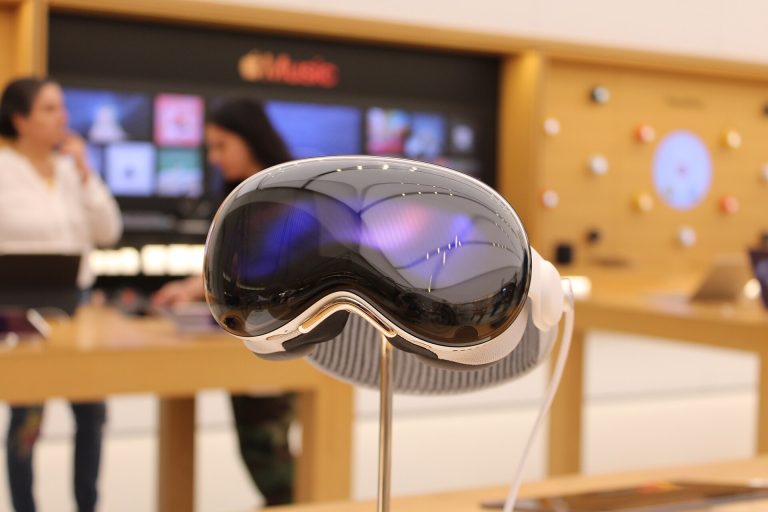
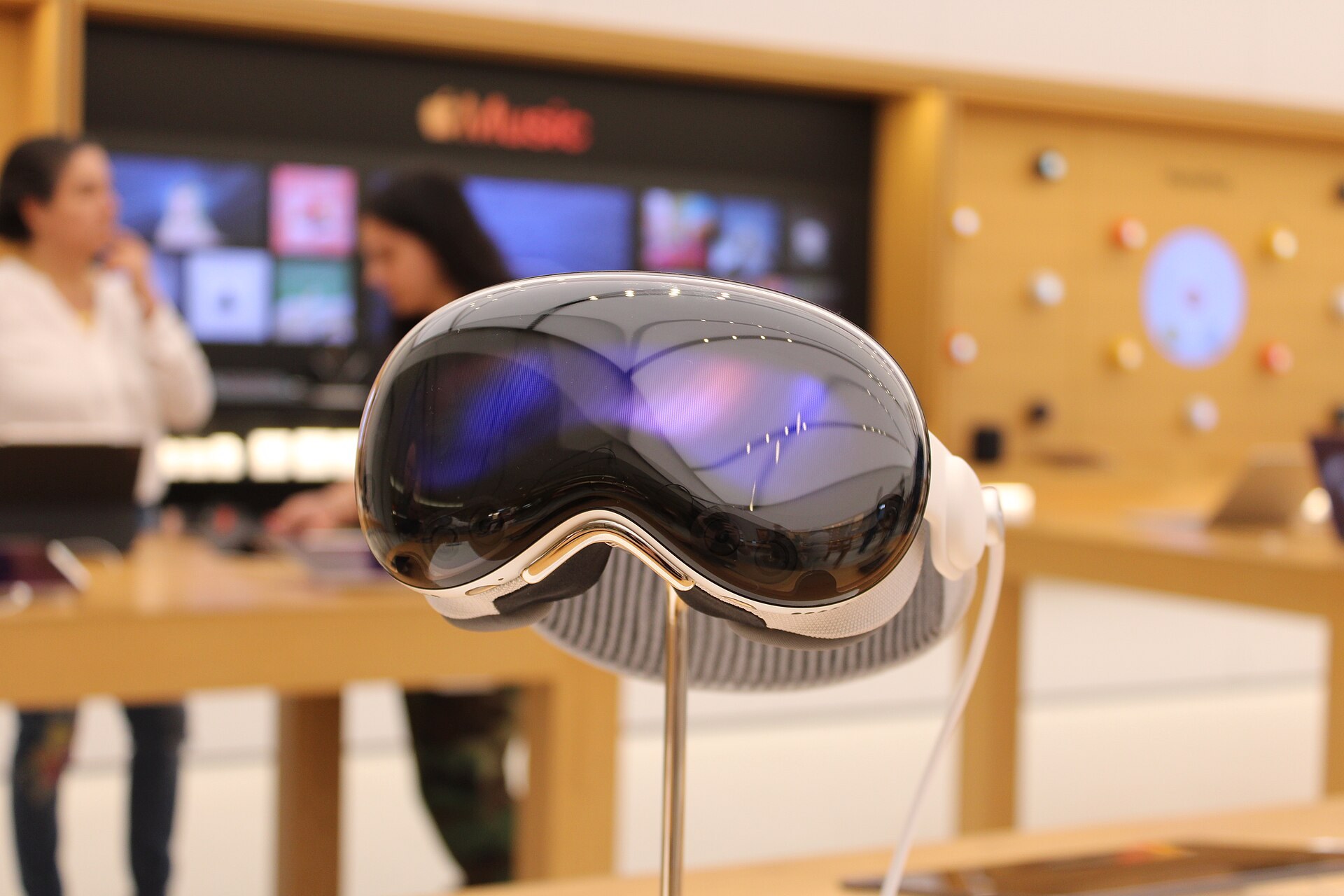
Apple announced Vision Pro in June 2023 and released it in the US on February 2, 2024, at $3,499. Eye tracking is the center of how you use it. You look at a button, then tap your thumb and index finger together to select it. There is no controller in the box.
Apple describes the system as a set of LEDs and infrared cameras that project invisible light patterns onto each eye. That is the same basic approach SMI used in its glasses and VR kits: infrared illumination, cameras close to the eye, and software that turns reflections and pupil position into a gaze point.
Again, Apple has not said that SMI’s technology powers Vision Pro. The reasonable reading, shared across most tech coverage, is that a company Apple bought in 2017 for its eye tracking expertise contributed to a product whose main input method is eye tracking. It is a strong inference, not a confirmed fact. If you are new to the headset itself, our explainer What Is Apple Vision Pro and How Spatial Computing Works covers the basics.
Look and tap
The look-and-tap model is exactly what SMI demoed in VR dev kits in 2016 and 2017. The hard part is making it feel instant and accurate across thousands of different faces. Most owners find Vision Pro’s gaze selection good enough that they stop thinking about it after a day, which is the best compliment an input method can get. Small targets in some iPad-style apps are still fiddly, and you will notice that if you try to hit tiny buttons quickly.
Foveated rendering
Vision Pro’s two micro-OLED displays carry about 23 million pixels in total. Driving that many pixels at full detail everywhere would be wasteful. Apple uses dynamic foveated rendering, sharpening what you look at and reducing detail elsewhere, which is the idea SMI championed in its demos years earlier.
Optic ID
Vision Pro also uses your eyes for security. Optic ID scans your iris to unlock the device and approve purchases. That is a different job from gaze tracking, but it uses the same eye-facing cameras and infrared light.
Privacy by design
Apple says where you look stays private. Apps do not receive your raw gaze data as you glance around. They only learn what you selected once you tap. That is a meaningful choice. Gaze data can reveal attention, interest and possibly health signals, which is exactly why researchers valued SMI trackers. Keeping it on the device protects you from apps building a profile of everything that catches your eye. The same worry fuels the debate covered in our piece on where smart glasses are banned now, from New York courts to Victoria schools.
Comfort check
Gaze-driven menus can tire your eyes in long sessions, and Vision Pro weighs roughly 600 to 650 g depending on the band and seal. Take regular breaks, and stop if you feel eye strain, headache or nausea.
What happened to SMI’s customers and hardware
For headset fans, the acquisition looks like a smart move by Apple. For the labs that relied on SMI, it was a headache.
Overnight, research groups lost their vendor. Existing trackers still worked, but there were no new licences, no future software updates and eventually no official repairs. Labs running multi-year studies had to decide whether to keep old SMI systems going or switch hardware mid-project, which can complicate comparisons across data sets.
Older SMI software also tied many labs to specific Windows versions and hardware. As those machines aged, keeping a working analysis setup became its own maintenance job. Some labs kept a dedicated “SMI PC” in a cupboard for years for exactly this reason.
Used SMI glasses and RED trackers still appear in the second-hand market. They can be a cheap way into eye tracking for a hobby project or teaching, but you are buying unsupported equipment. Check that the seller includes working software licences, dongles if required, and the original analysis tools, or the hardware is close to useless.
Player tip
If you inherit SMI data or hardware, export all raw gaze data to open formats such as CSV now, while a working copy of the original software still runs. Recovering it later is far harder.
Eye tracking options today
SMI’s exit helped grow the rest of the market. If you need eye tracking now, for research, development or simply to try it, these are the main directions.
| Option | Type | Best for |
|---|---|---|
| Tobii Pro glasses and screen trackers | Wearable and remote | Labs and UX teams wanting a turnkey system |
| Pupil Labs (Berlin) | Wearable glasses, open-source roots | Researchers wanting open data and flexible tools |
| SR Research EyeLink 1000 Plus | Tower or desktop, up to 2000 Hz | High-precision reading and vision science |
| Smart Eye | Automotive and research systems | Driver monitoring and in-car studies |
| Headsets with built-in tracking (PSVR 2, Vision Pro, Varjo, Pico enterprise models) | Integrated in HMD | VR development and immersive studies |
There is a neat twist here. Pupil Labs is also based in Berlin, so the city that produced SMI is still a center for eye tracking. Its open approach also answers the lesson SMI’s customers learned the hard way: if your data and analysis tools depend on one closed vendor, that vendor’s exit becomes your problem.
For consumers, the realistic way to try eye tracking at home is a headset that includes it. PSVR 2 uses it for foveated rendering and gaze controls in some titles. Vision Pro uses it for everything. Mainstream Meta Quest 3 owners do not have eye tracking at all, and no accessory adds it, so skip any listing that claims otherwise when you browse Meta Quest 3 accessories.
Why SMI still matters if you play in VR
You may never have touched an SMI tracker, but its ideas are in the headsets that are shaping this generation.
Better visuals for the same hardware. Foveated rendering lets a headset spend its power where your eye actually looks. That is how PSVR 2 squeezes extra detail out of a console, and how Vision Pro drives its dense displays without a desktop GPU.
Controller-free interfaces. Look-and-select interaction means you can navigate menus with your eyes and a small finger gesture. That matters for accessibility, too, since gaze input can help players who struggle with controllers.
More believable social VR. Eye contact between avatars changes how a conversation feels. As eye and face tracking spread, social apps feel less like puppets and more like people.
New privacy questions. Eye tracking data is sensitive. SMI built it for consenting study participants with ethics approval. Consumer headsets collect similar signals at scale, so it is worth checking each platform’s gaze data policy before you buy. Apple’s on-device approach is the current benchmark. Hold other companies to it.
There is a cautionary tale here too. Platform shifts can strand you. SMI’s research customers lost their vendor in 2017. Gamers see the same thing on a smaller scale when online games shut down, as in the Zenith: Nexus servers closing on December 18. Hardware and services you depend on can disappear when a bigger company changes plans.
The bottom line on SensoMotoric Instruments
SMI spent 26 years becoming one of the most trusted names in research eye tracking, then vanished into Apple almost overnight. Its tracker glasses, remote systems and VR prototypes showed what gaze input could do long before consumer headsets were ready for it. Apple has never said exactly how it used SMI’s work. Still, a headset that you control mainly with your eyes, built by the company that bought one of the best eye tracking teams in the world, is not a coincidence most observers are willing to accept.
If you own a Vision Pro or PSVR 2, you are using technology that SMI helped prove. If you care about where eye tracking goes next, watch for it in mainstream standalone headsets and lightweight smart glasses, and pay attention to who gets to see where you look.
FAQ
What was SensoMotoric Instruments?
SensoMotoric Instruments, usually shortened to SMI, was an eye tracking company founded in 1991 and based in Teltow, near Berlin. It made research-grade remote trackers, eye tracking glasses, analysis software and VR headset integrations for universities, carmakers, sports scientists, market researchers and medical users.
When did Apple buy SMI?
MacRumors reported the acquisition in June 2017, and Apple responded with its standard statement about buying smaller technology companies from time to time. The price was never disclosed.
Does Apple Vision Pro use SMI technology?
Apple has never confirmed it. Vision Pro relies on infrared eye tracking for navigation, foveated rendering and Optic ID, which matches SMI’s area of expertise. Most coverage treats SMI’s influence as very likely, but it remains an informed inference, not an official fact.
Can you still buy SMI eye trackers?
Not new. SMI stopped selling after the Apple deal, and official support ended. Used units turn up second-hand, but make sure they come with working software and licences, and expect no repairs or updates.
What are the best alternatives to SMI eye trackers?
Tobii, Pupil Labs, SR Research’s EyeLink systems and Smart Eye cover most research and industry needs. For immersive work, headsets with built-in tracking such as PSVR 2, Vision Pro and Varjo’s headsets are the practical choice.
Which consumer VR headsets have eye tracking?
PlayStation VR2 and Apple Vision Pro both include it, as did the now-discontinued Meta Quest Pro. The Meta Quest 3 and Quest 3S do not. If you mainly want great VR games worth your time in every genre, eye tracking is a nice extra rather than a must-have, so weigh it against price, comfort and library size.