
Valve announced the Steam Frame in November 2025 with an “early 2026” target, then pushed its pricing and schedule back when memory chip costs spiked. Below you’ll find what Valve has confirmed, what is still unknown as of late October 2026, and how to be ready the day orders open.
Last updated: October 29, 2026
Steam Frame Release Date at a Glance
If you only want the short version, here it is. Valve has confirmed the hardware, the specs and the general strategy. It has not given a firm ship date or a price that we could confirm on Valve’s store or in an official Steam post as of this update.
| Question | Status as of October 29, 2026 | Source quality |
|---|---|---|
| Is the Steam Frame real? | Yes, revealed November 12, 2025 | Official (Valve) |
| Original release window | “Early 2026” | Official (Valve) |
| Revised window | Goal of shipping in the first half of 2026, with pricing and timing under review | Official (Valve Steam blog, early 2026) |
| Firm release date | Not published | Nothing confirmable |
| Price | Not published; Valve told outlets at reveal it would cost less than the Valve Index | Official statements via proven reporters |
| Storage options | 256GB and 1TB | Official (Valve) |
| Pre-orders or reservations | Not opened at time of writing | Nothing confirmable |
| Regions | Not announced | Nothing confirmable |
The big point: Valve’s own first-half-2026 goal has passed without a public release date we could verify. That doesn’t mean the product is in trouble. It means Valve is doing what it said it would do, waiting until the economics of memory and storage settle before it commits to a price.
Steam Frame: What Valve Actually Announced
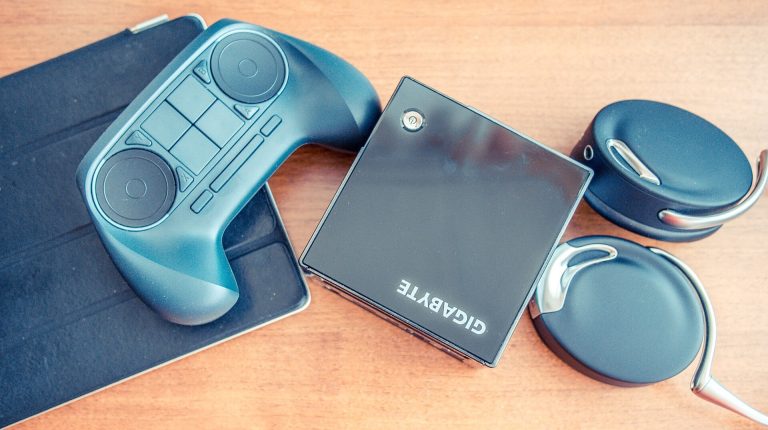
On November 12, 2025, Valve revealed three products at once: the Steam Frame headset, the Steam Machine living-room PC, and a new Steam Controller. All three run SteamOS and all three were pitched as parts of one ecosystem built around your existing Steam library.
The Frame is Valve’s first headset since the Valve Index in 2019, and it’s a very different product. The Index was a tethered, lighthouse-tracked enthusiast kit. The Frame is a standalone headset with inside-out tracking, a mobile chip, and a design that treats wireless streaming from your PC as the main way you’ll play.
Here’s what Valve confirmed on day one:
- Standalone SteamOS. The Frame runs a full ARM build of SteamOS. Valve says it can run Steam games natively on the headset, including many x86 Windows titles through a translation layer (FEX) combined with Proton.
- Streaming-first design. The box includes a dedicated USB Wi-Fi dongle that plugs into your PC and creates a direct 6GHz link to the headset, so your home router isn’t the bottleneck.
- Eye tracking with foveated streaming. Internal cameras track your eyes, and the stream spends its bitrate where you’re looking.
- Flat games, too. You can play non-VR Steam games on a large virtual screen, either streamed or run locally.
- Android app support. Valve said Android APKs can run on the headset.
- New controllers. Steam Frame Controllers use TMR (tunnel magnetoresistance) thumbsticks and capacitive finger sensing, and run on a single AA battery each.
- A verification program. “Steam Frame Verified” works like the Steam Deck Verified badge, telling you which games run well on the headset.
What Valve didn’t announce on day one matters just as much. At the November 2025 reveal there was no price, no exact date, no list of launch regions, no bundle details beyond the dongle, and no confirmed battery runtime.
Steam Frame Specs: 16GB RAM, 2160×2160 Per Eye
The spec sheet is where the Frame separates itself from Meta’s standalone headsets. The 16GB of memory is double what a Quest 3 has, and that memory is exactly why the price became a problem later.
| Spec | Steam Frame (Valve-confirmed unless noted) |
|---|---|
| Chip | Qualcomm Snapdragon 8 Gen 3 |
| Memory | 16GB LPDDR5X |
| Storage | 256GB or 1TB UFS, plus microSD slot |
| Display | LCD, 2160 × 2160 per eye |
| Refresh rate | 72Hz to 144Hz (144Hz labelled experimental) |
| Lenses | Custom pancake lenses |
| Field of view | Around 110° (per Valve briefings and hands-on reports) |
| Tracking | Inside-out cameras, plus eye tracking |
| Passthrough | Monochrome (black and white) |
| Wireless | Wi-Fi 7, plus included 6GHz PC streaming dongle |
| Weight | About 440g total, with the front core module around 185g |
| Battery | 21.6Wh, mounted at the rear of the strap |
| Controllers | TMR sticks, capacitive tracking, AA battery (Valve quotes about 40 hours) |
| Operating system | SteamOS (ARM) |
| Price | Not announced |
A few of these numbers deserve context.
The 440g figure is the headline for comfort. A Quest 3 weighs about 515g and the Index about 809g. Valve put the battery at the back to balance the load, which is the same trick third-party “elite” straps use on Quest. Expect less pressure on your cheeks and forehead during long sessions.
The display is LCD, not OLED. At 2160 × 2160 per eye it’s sharper than a Quest 3, but you won’t get the true blacks of an OLED panel like PS VR2’s. Dark horror games will look greyer than they do on Sony’s headset.
Monochrome passthrough is a deliberate trade. Valve built the Frame for playing games, not mixed reality. You can see your room well enough to find your drink, but colour mixed reality apps won’t be the Frame’s strength.
Battery life is unconfirmed. Valve gave the capacity (21.6Wh) but not an official hours figure. Streaming should drain it more slowly than running games natively on the Snapdragon chip, but wait for reviews before you plan three-hour sessions.
Steam Frame Release Date: What We Actually Know
Here’s the timeline built only from official statements and dated events, so you can see how the “early 2026” promise moved.
| Date | Event | Source quality |
|---|---|---|
| November 12, 2025 | Steam Frame, Steam Machine and Steam Controller revealed; “early 2026” target | Official (Valve) |
| November 2025 | Hands-on previews publish from major outlets | Proven reporters |
| Late 2025 to early 2026 | DRAM and NAND contract prices climb sharply on AI data centre demand | Industry analysts and trade press |
| Early 2026 | Valve posts that memory and storage shortages mean it must revisit pricing and ship timing; still aiming for the first half of 2026 | Official (Valve Steam blog) |
| End of June 2026 | First-half window closes without a published date or price we could confirm | Our check of Valve’s store and posts |
| October 29, 2026 | No firm date, price or reservation queue confirmed | Our check |
So the honest answer to “when is the Steam Frame release date?” is that Valve hasn’t said, and the window it gave publicly has passed. Coverage across the search results reflects the same thing: the ranking pages either call it “TBD” or report Valve-adjacent language suggesting a launch is close, without a calendar date attached.
What you should not trust: retailer listings with placeholder dates, YouTube thumbnails promising “leaked” launch days, and social posts from accounts with no track record. Valve sells its own hardware through Steam in its main markets. When the date is real, it will appear on the Steam store page and in a Steam blog post first.
Player tip
Follow the Steam Frame store page on Steam and turn on email notifications in your Steam account settings. Valve has historically announced hardware orders through Steam itself, so this is the fastest reliable alert you’ll get.
The Memory-Chip Crisis Reshaping All Gaming Hardware
The Frame’s delay isn’t a Valve-only story. It’s the clearest example of a problem hitting every company that builds consumer electronics in 2026.
AI data centres need enormous amounts of high-bandwidth memory. Memory makers have shifted production toward those server products because the margins are far better. The result, tracked by market research firms like TrendForce and reported widely by trade press, has been steep increases in contract prices for ordinary DRAM and NAND flash, the same chips that go into phones, PCs, consoles and headsets.
Now look at what the Frame needs: 16GB of LPDDR5X and either 256GB or 1TB of UFS storage. Those are exactly the parts that got more expensive. A headset that made sense at one price in autumn 2025 needed a new bill of materials by early 2026.
Valve was unusually open about this. Rather than quietly slip the date, it told Steam users directly that shortages of memory and storage forced it to revisit both pricing and the shipping schedule for the Steam Machine and the Steam Frame. That’s an official statement, and it’s the single most reliable piece of information about the delay.
Why Valve can’t just eat the cost
Valve has sold hardware close to cost before, most famously with the $399 Steam Deck in 2022. But a loss-leader strategy works best when you know what your parts will cost for the whole production run. When memory prices are moving month to month, locking in a launch price risks selling at a loss on every unit for a year, or raising the price after launch and angering early buyers.
Waiting is the safer move, even if it frustrates you.
Who else is affected
Expect the same pressure on any device with large amounts of RAM. Meta’s next standalone headset, whatever ships after the Quest 3 line, faces the same supplier market, which is one reason any Meta Quest 4 release date chatter should be read with the memory market in mind. PC graphics cards, laptops and phones have all faced similar pressure through 2026.
The Pricing Question Valve Won’t Answer
Valve has given exactly one firm pricing signal. At the reveal, Valve told multiple outlets that the Steam Frame would cost less than the Valve Index. That’s a proven-reporter account of an official statement, and it’s the only price anchor you can rely on.
Here’s why that anchor is less helpful than it sounds:
| Product | Launch price | Notes |
|---|---|---|
| Valve Index full kit (2019) | $999 | Headset, controllers, two base stations |
| Valve Index headset only (2019) | $499 | Required existing base stations and controllers |
| Steam Deck LCD (2022) | $399 / $529 / $649 | Three storage tiers |
| Steam Deck OLED (2023) | $549 / $649 | 512GB and 1TB |
| Meta Quest 3 512GB | $499 | Current Meta price for this model |
| Meta Quest 3S 128GB | $299 | Entry Meta headset |
| PlayStation VR2 | $399 | After Sony’s 2025 price cut; launched at $549 |
| Apple Vision Pro (M5) | $3,499 | Refreshed October 2025 |
“Less than the Index” could mean less than $999 (the full kit) or less than $499 (the headset alone). Valve was comparing against the complete Index experience, since the Frame ships with controllers and needs no base stations. So the promise realistically caps the price below $999, not below $499.
Our read on likely pricing
This is analysis, not a leak. Before the memory spike, a price in the region of a premium Quest looked plausible for the 256GB model, given that the Frame has double the RAM of a Quest 3, eye tracking, and a bundled streaming dongle. After the spike, it would be surprising if the base model came in under the Quest 3’s $499, and the 1TB model will carry a hefty storage premium.
Valve also doesn’t run an ad business. Meta can subsidise Quest hardware because it earns money from its platform and data. Valve earns from Steam sales, which helps, but it has never priced headsets as aggressively as Meta does. Plan your budget accordingly.
Steam Machine at $1,049: The Price Ceiling Now Hanging Over the Frame
Much of the current coverage ranking for Steam hardware has centred on a $1,049 figure for the Steam Machine. Treat that as reported rather than something we’ve confirmed on Valve’s own store at the time of writing, but the number tells you a lot about the direction of travel either way.
The Steam Machine was announced alongside the Frame with a semi-custom AMD chip (a six-core Zen 4 CPU and RDNA 3 graphics), 16GB of DDR5 system memory plus 8GB of GDDR6, and 512GB or 2TB of storage. Valve said it would price the Machine in line with a comparable gaming PC rather than subsidise it like a console. If a living-room box with that spec lands around $1,049, it shows how far memory prices have pushed Valve’s costs.
Why this matters for you as a VR player:
- It confirms Valve won’t sell at console-style losses. If Valve won’t subsidise a box designed to sell Steam games in the living room, it’s unlikely to subsidise a headset that sells far fewer units.
- It sets a combined ceiling. Valve pitched the Machine and the Frame as partners: the Machine renders, the Frame displays. A bundle of the two at current memory prices would cost well over $1,500.
- It makes your existing PC more valuable. The Frame streams from any capable Windows or Linux gaming PC. If you already own one, you skip the Machine cost entirely.
If you’re weighing the two products together, our piece on what the Steam Machine means for VR headset owners covers whether a Machine actually makes sense as a dedicated VR rendering box.
Why “Streaming-First” Changes the VR Math
Most people searching for the Steam VR headset release date want to know one thing: will it play their library well? The Frame’s design answers that through streaming rather than raw on-board power.
The dongle is the clever part
Wireless PC VR on a Quest usually means Air Link, Virtual Desktop or Steam Link running over your home Wi-Fi. That works, but it depends heavily on your router, where it sits, and how many other devices share the network.
The Frame’s included dongle plugs into your PC and talks directly to the headset over 6GHz. Valve also gave the headset separate radio capacity so it can keep its normal Wi-Fi connection while streaming. In practice, this should remove the most common cause of stutter and artefacts in wireless PC VR.
Foveated streaming squeezes more out of the link
Your eyes only see fine detail in a small area at the centre of your gaze. The Frame’s eye tracking tells the stream where you’re looking, and the encoder gives that spot more quality while compressing the periphery harder. Hands-on reporters consistently said they couldn’t spot the trick in normal play.
This is different from foveated rendering, where the game itself renders less detail. Foveated streaming works on any game you stream, without developers adding support, which is why Valve leaned on it.
Standalone is a bonus, not the main event
The Snapdragon 8 Gen 3 is a capable phone chip, and 16GB of RAM gives it headroom. But running x86 Windows games through translation on an ARM chip costs performance. Lighter games and the many flat indie titles on Steam will be fine locally. Heavyweight PC VR games like Half-Life: Alyx are what the PC stream is for.
Cheap Steam VR titles are a good test of both modes. A small physics sandbox like Voxel Playground, which launched on Steam for $6.99 with a free demo, is exactly the kind of game that could run either streamed or natively once Frame Verified listings appear.
Comfort check
Streamed VR adds latency, and dropped frames are a fast route to nausea. If you’re prone to motion sickness, start with seated, teleport-movement games and stop at the first sign of a headache or sweating.
Steam Frame vs Meta Quest 3 vs Quest 3S vs Valve Index
You’ll naturally compare the Frame against what you can buy today. Here’s how the confirmed numbers line up.
| Steam Frame | Meta Quest 3 | Meta Quest 3S | Valve Index | |
|---|---|---|---|---|
| Release | Not yet released | October 2023 | October 2024 | June 2019 |
| Price | Not announced | $499 (512GB) | From $299 | $999 at launch (full kit) |
| Display | LCD | LCD | LCD | LCD |
| Resolution per eye | 2160 × 2160 | 2064 × 2208 | 1832 × 1920 | 1440 × 1600 |
| Max refresh | 144Hz (experimental) | 120Hz | 120Hz | 144Hz |
| Lenses | Pancake | Pancake | Fresnel | Fresnel-style dual element |
| Field of view | Around 110° | 110° H / 96° V | 96° H / 90° V | Around 130° |
| RAM | 16GB | 8GB | 8GB | N/A (PC-powered) |
| Eye tracking | Yes | No | No | No |
| Passthrough | Monochrome | Colour | Colour | Basic camera view |
| Weight | About 440g | About 515g | About 514g | About 809g |
| Tracking | Inside-out | Inside-out | Inside-out | Base stations |
| Standalone | Yes (SteamOS) | Yes (Horizon OS) | Yes (Horizon OS) | No |
Against Quest 3
The Frame wins on resolution, memory, weight and eye tracking. The Quest 3 wins on colour passthrough, a huge native standalone library, and the fact that you can buy one today. For mixed reality games and fitness apps, the Quest 3 is the better device. For PC VR streaming, the Frame’s dongle and foveated streaming should give it a clear edge.
Against Quest 3S
The 3S is the budget pick, and it’ll stay that way. Its Fresnel lenses and lower resolution are noticeable side by side with pancake headsets. The Frame won’t compete on price here, so the 3S remains the sensible choice if $299 is your ceiling. New Quest releases like Terry’s Terraforming, out on Quest 3 and 3S for $14.99, are a reminder that Meta’s store still has exclusives the Frame won’t offer natively.
Against Valve Index
This is the comparison that tells you what Valve gave up. The Index’s wider field of view and lighthouse tracking remain top-tier for fast games like Beat Saber at expert levels, where controllers move behind your head. Inside-out tracking loses controllers when they leave camera view, though modern prediction hides most of it. In exchange, the Frame drops nearly 370g, adds eye tracking, removes all the cables and base stations, and works standalone.
If you own an Index and play competitive or rhythm games, there’s no rush. If your Index mostly gathers dust because setup is a chore, the Frame is aimed squarely at you.
Steam Frame vs Apple Vision Pro: Different Universes
People do compare these two because both are expensive, eye-tracked and premium. They’re built for completely different jobs.
| Steam Frame | Apple Vision Pro (M5) | |
|---|---|---|
| Price | Not announced (below $999 per Valve) | $3,499 |
| Display | LCD, 2160 × 2160 per eye | Micro-OLED, about 23 million pixels total |
| Passthrough | Monochrome | High-quality colour |
| Controllers | Included, gamepad-style | None included; hand and eye input |
| Main purpose | Playing Steam games | Spatial computing, media, productivity |
| Platform | SteamOS, SteamVR | visionOS |
The Vision Pro is a mixed reality computer that happens to play some games. The Frame is a games machine that happens to have passthrough. Apple’s software roadmap keeps moving toward Apple Intelligence and system features; the visionOS 27.2 release, for example, added Siri and SynthID features that weren’t specific to Vision Pro at all. None of that changes the core fact that Vision Pro has no meaningful access to the Steam VR library.
If you want to play Half-Life: Alyx, the Frame wins by default. If you want a giant private cinema with beautiful colour passthrough and you’ve got $3,499 spare, the Vision Pro is still the premium choice. Android XR is a third path: Google and XREAL’s Aura glasses launching from $1,099 and shipping mid-November show how lightweight glasses are heading toward media and productivity rather than full VR gaming.
Historical Context: From Index to a SteamOS Hardware Push
Valve’s past launches tell you more about the Frame’s likely timeline than any rumour. The gap between announcement and shipping has varied wildly.
| Product | Announced | Orders opened | Shipped | Announce-to-ship gap |
|---|---|---|---|---|
| Steam Controller (original) | September 2013 | 2015 | November 2015 | About 2 years |
| Valve Index | April 30, 2019 | April 30, 2019 | June 28, 2019 | About 2 months |
| Steam Deck | July 15, 2021 | July 16, 2021 (reservations) | February 25, 2022 | About 7 months |
| Steam Deck OLED | November 9, 2023 | November 9, 2023 | November 16, 2023 | 1 week |
| Steam Frame | November 12, 2025 | Not yet | Not yet | Over 11 months and counting |
Two patterns stand out.
First, when Valve controls its supply chain and the product is an iteration (Deck OLED), it ships almost immediately. When the product is new and Valve needs scale (original Steam Deck), it uses a reservation queue and ships in waves over many months.
Second, Valve has slipped before. The original Steam Controller took about two years from reveal to retail. The first Steam Machines program from 2015 relied on partner PCs and fizzled. Valve learned from both: the Deck worked because Valve built it, priced it aggressively and supported it with years of software updates.
The Frame sits inside that Deck-style strategy. SteamOS now runs on handhelds, on the Steam Machine, and on the Frame. Valve’s hardware push is about one operating system across every screen, with your Steam library following you. That bigger plan makes it more likely Valve waits for the right price rather than rushing a single product out.
There’s also a reminder in all this about platform longevity. VR games that depend on live servers can disappear even on healthy platforms; Zenith: Nexus closing its servers on December 18 after sales had already stopped is one example. Valve’s pitch, that the Frame plays the library you already own, is partly a defence against exactly that risk.
What the Experts Are Saying
The best independent information on the Frame comes from the hands-on previews that outlets ran in November 2025 after Valve’s briefings. These are proven reporters who’ve reviewed every major headset, and their impressions lined up closely.
What they praised:
- Weight and balance. Reporters consistently highlighted how light the front of the headset feels, thanks to the rear-mounted battery.
- Foveated streaming. Previewers said they couldn’t spot the compression in normal play, and that wireless PC VR felt closer to a wired connection than anything they’d used on Quest.
- Lens clarity. The pancake lenses drew praise for edge-to-edge sharpness compared with the Index’s older optics.
- Controllers. The TMR sticks and the full gamepad-style layout got positive notes, especially for playing flat Steam games in the headset.
What they questioned:
- Monochrome passthrough. Several outlets flagged it as a step behind Quest 3’s colour passthrough.
- LCD instead of OLED. Reporters noted the Frame wouldn’t match OLED headsets on contrast.
- Price uncertainty. Almost every preview ended by saying the verdict depended on a price Valve wouldn’t give.
That last point is still the deciding factor eleven months later. Full reviews will only arrive once units ship, and those reviews will cover battery life, standalone performance through FEX, and tracking in fast games, none of which previews could fully test.
Steam Frame Pre-Order Playbook: How to Actually Get One
Valve hasn’t opened orders, so nobody can tell you the exact process yet. But Valve’s previous launches give you a clear idea of what to prepare.
Quick steps: Get ready for Steam Frame orders
- Use a Steam account with real purchase history.
- Add and verify a payment method now.
- Enable Steam Guard and email alerts.
- Follow the Steam Frame store page.
- Check your PC and Wi-Fi setup.
Use an established Steam account
For the Steam Deck reservations in July 2021, Valve limited early access to accounts that had made a purchase before June 2021. The goal was blocking scalper bots using fresh accounts. Expect something similar. If your account is new or has no purchases, buy something small now.
Prepare your payment and security
The Deck reservation required a $5 deposit, and the first minutes saw heavy server load. Have a saved card or Steam Wallet funds ready, and make sure Steam Guard is on so you aren’t locked out by a verification prompt at the critical moment.
Expect a queue, possibly waves
Valve hasn’t said whether the Frame will use a reservation queue, a first-come pre-order, or a lottery-style draw. A reservation queue with shipping waves is the most likely, based on the Deck. If you aren’t in the first wave, you may wait weeks or months.
Avoid resellers and scams
When demand outstrips supply, scalped units appear on eBay at inflated prices, and fake “pre-order” sites pop up. Valve sells directly through Steam in its main markets. For the Deck, Valve used Komodo as its partner in Japan, South Korea, Taiwan and Hong Kong. Frame regional partners haven’t been announced. Don’t pay any third party for a “guaranteed reservation.”
Get your PC ready
The Frame’s streaming dongle plugs into your gaming PC via USB. Check that you have a free USB port with a clear line of sight to your play area, and that your graphics card can handle the PC VR games you plan to play. Clear a play space if you want room-scale: Valve hasn’t published minimum space numbers, but standard SteamVR guidance is about 2m by 1.5m for room-scale.
5 Predictions for the Steam Frame and VR Hardware
These are our predictions, based on the confirmed facts above. They aren’t leaks or insider information.
1. Valve announces price and date together, then opens orders within days
Valve’s pattern with the Index and Deck OLED was to reveal price and open orders at the same moment, which prevents a long gap where competitors can react. Expect the price, date and reservation system to arrive in one Steam post.
2. The base model costs more than a Quest 3
At current memory prices, a 16GB, eye-tracked headset with a bundled dongle is hard to sell below $499 without a loss. Valve’s promise of “less than the Index” will hold, but the 256GB model probably won’t undercut Meta.
3. Supply will be tight for months
A reservation queue with staggered shipping waves is likely. If you want one at launch, the first hour matters.
4. Meta responds on PC streaming
The Frame’s biggest advantage is PC VR streaming quality. Expect Meta to improve Air Link and Steam Link support on Quest, and potentially to talk up eye tracking on its next headset.
5. Sony and Apple stay out of this fight
PS VR2 has settled into a niche as a PC VR option via Sony’s adapter, and for PS5 owners it remains the console choice. Our guide to the PS VR2 explains that path for PS5 players. Apple will keep targeting spatial computing. The direct battle is Valve against Meta for PC gamers.
FAQ
What is the Steam Frame release date?
Valve hasn’t published a firm release date as of October 29, 2026. It originally targeted early 2026, then said memory and storage shortages meant it had to revisit timing, while aiming for the first half of 2026. That window has passed without a confirmed date.
How much will the Steam Frame cost?
No price has been announced. Valve told outlets at the reveal that it would cost less than the Valve Index, which was $999 for the full kit in 2019. Rising memory prices make a price above $499 likely.
Can I pre-order the Steam Frame?
Not yet. Valve hasn’t opened pre-orders or a reservation queue that we could confirm. When it does, it will happen through the Steam store, so follow the Steam Frame page in your Steam account.
Does the Steam Frame need a PC?
No. The Frame runs SteamOS standalone and can play many games natively. For demanding PC VR games, you’ll get the best experience streaming from a gaming PC using the included wireless dongle.
Will the Steam Frame work with my existing SteamVR library?
Yes, through PC streaming. Valve built the Frame around the SteamVR library, and it can also show flat Steam games on a virtual screen. Native standalone compatibility depends on the game, and Valve’s Steam Frame Verified badge will tell you which titles run well.
Is the Steam Frame better than the Quest 3?
On paper, it’s sharper, lighter, has twice the RAM, and adds eye tracking. The Quest 3 has colour passthrough, a large exclusive library, and is on sale today. For PC VR players, the Frame looks stronger. For mixed reality and a lower price, the Quest 3 remains the better buy.
Should I wait for the Steam Frame or buy a headset now?
Wait if you play mostly PC VR, already own a capable gaming PC, and can afford a likely premium price. Buy a Quest 3 or Quest 3S now if you want to play this year, care about mixed reality, or need a headset under $500.